- Mt Elizabeth (Orchard) #06-05
- (65) 9088 4555
- Mt Elizabeth (Orchard) #06-05
- (65) 9088 4555
Radiofrequency ablation (RFA) is typically recommended to manage long-term joint and spine pain, using targeted radiofrequency energy to disrupt specific nerves responsible for sending pain signals to your brain.
This treatment does not repair any structural damage within the joint, but it can help manage the pain.
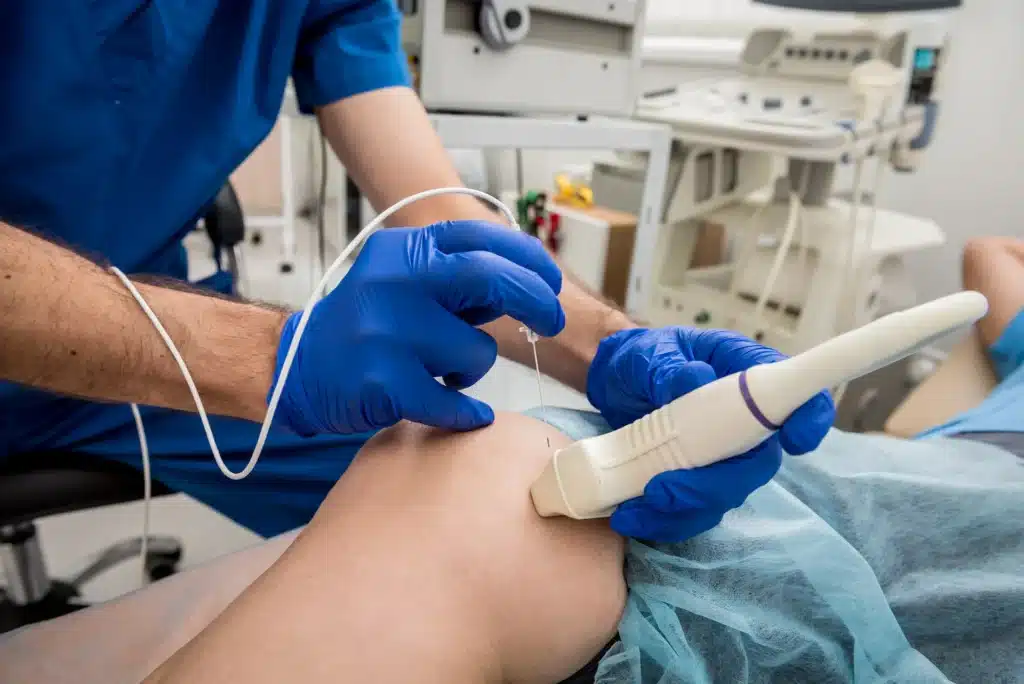
If you still feel pain in your joints or spine despite taking medications or injections, or going for physiotherapy, you may consider radiofrequency ablation.
At Alps Orthopaedic Centre, we also consider this treatment for:
We will perform a diagnostic nerve block to confirm that the targeted nerve is responsible for your pain before proceeding with the radiofrequency ablation treatment.
Before scheduling your procedure, we’ll review your medical history and current medications. Let us know if you take blood-thinning medication, as you may need to stop it several days before your treatment.
You should also inform us if you have diabetes, allergies, an infection, or any implanted medical devices. These may affect how we plan your procedure.
On the day of treatment, you should:
The procedure starts with cleaning and numbing the area we’ll be targeting.
Using imaging guidance such as fluoroscopy (real-time X-ray), a thin needle is inserted into the skin and guided to the nerve responsible for your pain. Imaging allows us to confirm the right placement while avoiding surrounding structures.
Once the needle is positioned correctly, we deliver controlled radiofrequency energy through it. This generates heat at the tip of the needle, creating a small, targeted lesion on the nerve. The lesion interrupts the nerve’s ability to transmit pain signals.
We may treat more than one nerve during the same session, depending on the source of your pain. A radiofrequency ablation treatment in Singapore typically takes less than an hour.
After the procedure, you will be monitored briefly before being allowed to go home on the same day.
You may temporarily feel mild soreness, swelling, or a burning sensation at the treatment site for a few days. You can apply an ice pack at intervals to ease your discomfort.
Avoid strenuous activity for the first 24 hours post-procedure. After that, you can gradually return to your usual activities. Many patients return to their normal routines within a few days.
Your pain may not be completely gone right away. Some people feel improvement within a few days, while others may notice gradual relief over several weeks.
If you experience severe pain, increasing weakness, numbness, or signs of infection such as redness or swelling at the treatment site, schedule a follow up with us as soon as possible.
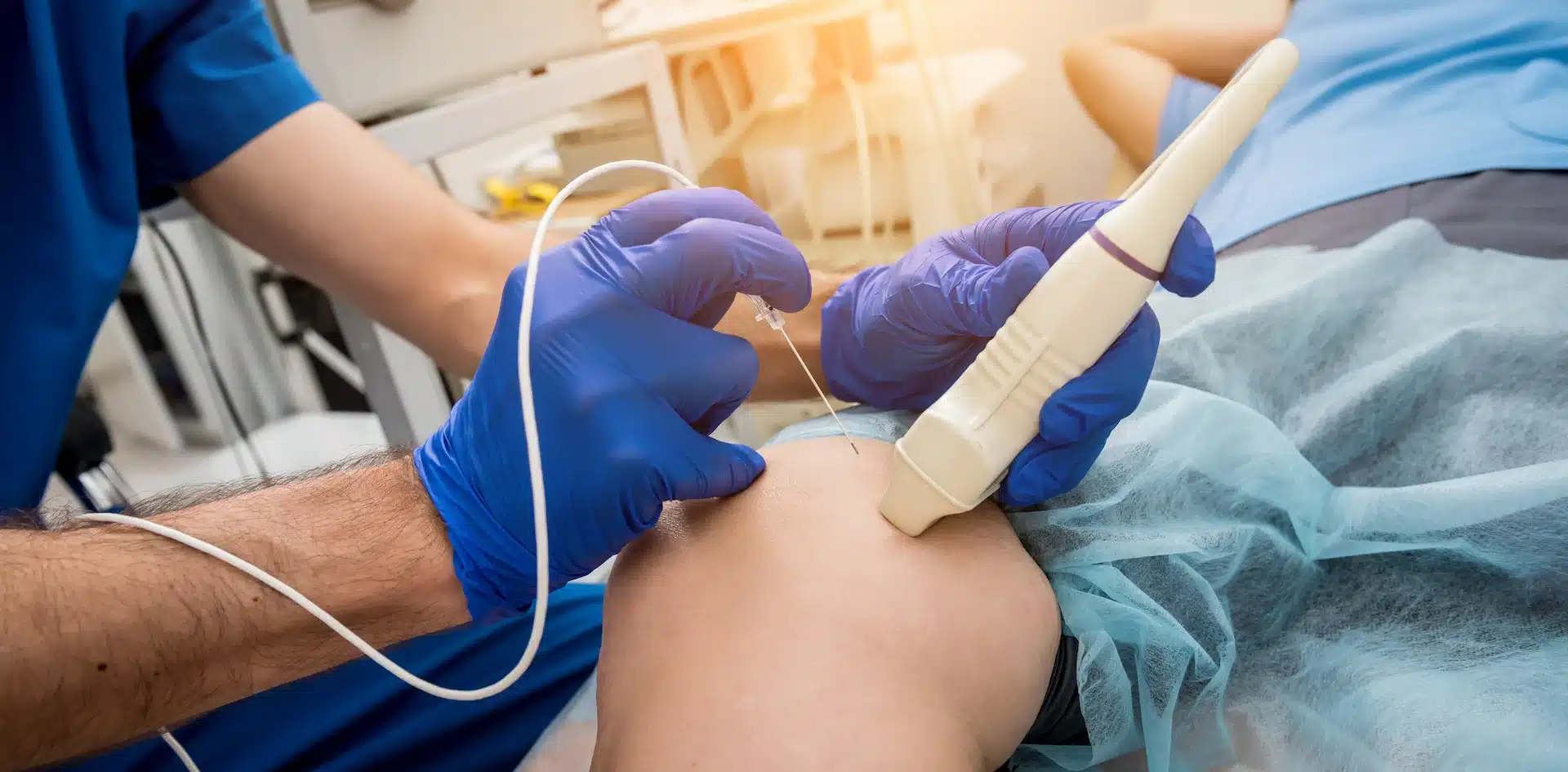
Radiofrequency ablation offers a non-surgical option for managing chronic joint and spine pain. If you’re suited for the treatment, it helps:

Radiofrequency ablation is generally safe, but no medical procedure is completely risk-free. You may experience:
Infection, bleeding, or nerve irritation are uncommon but possible. At Alps Orthopaedic Centre, we take precautions to reduce these risks and will review them with you before treatment.
Radiofrequency ablation is not suitable for every type of pain. The key is identifying whether your symptoms come from a nerve pathway that can be effectively targeted.
As an experienced orthopaedic specialist in Singapore, Dr Jerry Chen manages a wide range of spine and joint conditions using both conservative and minimally invasive techniques, including radiofrequency ablation. He tailors each treatment plan to your diagnosis, lifestyle, and recovery goals.
We’ll numb the treatment area during the procedure, so you may feel pressure or brief discomfort rather than sharp pain. Afterwards, it’s common to experience mild soreness at the treatment site for a few days. This usually settles on its own.
A 2020 study reports an average pain reduction of about 45% to 50% of people who had gotten a radiofrequency ablation.
Pain relief typically lasts about four to five months, according to the same study. The treated nerve can regenerate.
You can go home on the same day after the procedure, and resume light activities after 24 hours. Some people feel their pain improving within a few days, while others may notice gradual relief over several weeks.

MBBS (S’pore), MRCSEd, MMed (Ortho), FRCSEd (Ortho)
Fellowship-trained Consultant Orthopaedic Surgeon & Medical Director
At Alps Orthopaedic Centre, we specialise in Enhanced Recovery After Surgery (ERAS). Performed as a Day Surgery, the ERAS Direct Anterior Approach in Total Hip Replacement (THR) technique as well as ERAS Total Knee Replacement (TKR), reduces the average hospitalisation stay, utilising techniques which enable the patient to suffer from less pain and recover faster. We are an Orthopaedic clinic in Singapore, which specialises in ERAS and do our utmost to enable patients to return to everyday activities as early as possible.
Our Orthopaedic clinic provides specialised diagnosis and effective treatment of musculoskeletal problems, especially Day Surgery / Enhanced Recovery After Surgery (ERAS) For Hip and Knee Surgery, Sports Injuries and Trauma Fractures. If you are considering hip or knee surgery or minimally invasive treatments, book an appointment with our experienced Consultant Orthopaedic Surgeon, Dr Jerry Chen, for a thorough assessment and treatment plan.
Our aim is to boost patient well-being, optimising every aspect of the surgical journey. By minimising the recovery period, patients are able to go back to activities that they love. The Alps team offers comprehensive financial counselling sessions to ensure our patients understand their options and make informed decisions regarding their treatment plans.
MBBS (S’pore), MRCSEd, MMed (Ortho), FRCSEd (Ortho)
Fellowship-trained Consultant Orthopaedic Surgeon & Medical Director
At Alps Orthopaedic Centre, we specialise in Enhanced Recovery After Surgery (ERAS). Performed as a Day Surgery, the ERAS Direct Anterior Approach in Total Hip Replacement (THR) technique as well as ERAS Total Knee Replacement (TKR), reduces the average hospitalisation stay, utilising techniques which enable the patient to suffer from less pain and recover faster. We are an Orthopaedic clinic in Singapore, which specialises in ERAS and do our utmost to enable patients to return to everyday activities as early as possible.
Our Orthopaedic clinic provides specialised diagnosis and effective treatment of musculoskeletal problems, especially Day Surgery / Enhanced Recovery After Surgery (ERAS) For Hip and Knee Surgery, Sports Injuries and Trauma Fractures. If you are considering hip or knee surgery or minimally invasive treatments, book an appointment with our experienced Consultant Orthopaedic Surgeon, Dr Jerry Chen, for a thorough assessment and treatment plan.
Our aim is to boost patient well-being, optimising every aspect of the surgical journey. By minimising the recovery period, patients are able to go back to activities that they love. The Alps team offers comprehensive financial counselling sessions to ensure our patients understand their options and make informed decisions regarding their treatment plans.
MBBS (S’pore), MRCSEd, MMed (Ortho), FRCSEd (Ortho)
Fellowship-trained Senior Consultant Orthopaedic Surgeon & Medical Director
At Alps Orthopaedic Centre, we specialise in Enhanced Recovery After Surgery (ERAS). Performed as a Day Surgery, the ERAS Direct Anterior Approach in Total Hip Replacement (THR) technique as well as ERAS Total Knee Replacement (TKR), reduces the average hospitalisation stay, utilising techniques which enable the patient to suffer from less pain and recover faster. We are an Orthopaedic clinic in Singapore, which specialises in ERAS and do our utmost to enable patients to return to everyday activities as early as possible.
Our Orthopaedic clinic provides specialised diagnosis and effective treatment of musculoskeletal problems, especially Day Surgery / Enhanced Recovery After Surgery (ERAS) For Hip and Knee Surgery, Sports Injuries and Trauma Fractures. If you are considering hip or knee surgery or minimally invasive treatments, book an appointment with our experienced Senior Consultant Orthopaedic Surgeon, Dr Jerry Chen, for a thorough assessment and treatment plan.
Our aim is to boost patient well-being, optimising every aspect of the surgical journey. By minimising the recovery period, patients are able to go back to activities that they love. The Alps team offers comprehensive financial counselling sessions to ensure our patients understand their options and make informed decisions regarding their treatment plans.

