

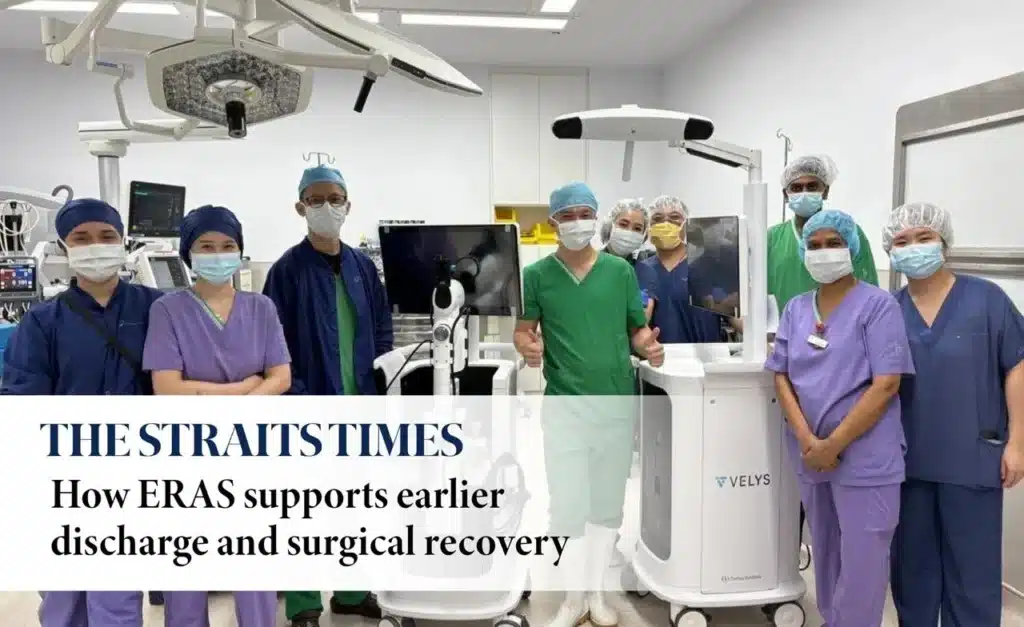
Published as part of a Straits Times feature on Gleneagles Hospital’s approach to enhanced surgical recovery (April 2026)
Dr Jerry Chen is featured in a recent Straits Times article on how ERAS (Enhanced Recovery After Surgery) is helping patients recover faster after surgery.
ERAS: A Faster Path Back to Mobility
Patients are going home sooner and recovering with less pain and disruption to their daily lives, thanks to a structured programme called Enhanced Recovery After Surgery (ERAS).
ERAS brings surgeons, anaesthetists, nurses, physiotherapists and dietitians together around a single recovery plan for each patient, one that starts well before the operation itself, with preparation such as strength-building exercises, nutrition planning, and clear expectations about what recovery will involve.
ERAS is originally used for total knee replacement, the programme has since been extended to total hip replacements and selected procedures in other specialities, reflecting how central this coordinated approach has become to surgical care at the hospital.
Dr Jerry Chen is one of the pioneers of this programme. An orthopaedic surgeon, formerly of Singapore General Hospital (SGH), he spearheaded the ERAS workgroup for knee replacements and is highly recognised for successfully using ERAS to transition total knee and hip replacements to same-day procedures.
Dr Jerry’s Insights on Hip and Knee Surgery
In the article, he discussed the direct anterior approach to total hip replacement, a method that accesses the hip joint from the front through a small incision, working between the muscles rather than cutting or detaching them, as is often necessary with more traditional approaches.
By keeping the surrounding muscles intact, many patients are able to put aside walking aids sooner, with some taking meaningfully more steps within just two weeks of surgery. For many, this translates into a real difference in quality of life. A number of patients have returned to sports and recreational activities they enjoy, including golf and racket sports, well ahead of the timelines associated with more traditional surgery.
Dr Jerry also spoke about knee preservation surgery in the piece, an option offered to younger patients with early knee degeneration. Rather than moving straight to a total knee replacement, this can involve realigning the joint, repairing cartilage or ligaments, and improving how the joint absorbs shock and moves. Done at the right time, it can delay or in some cases avoid the need for a full knee replacement later on.
Why This Matters
None of this happens in isolation. Less invasive surgical techniques work hand in hand with programmes like ERAS and the hospital’s expanding range of day surgery options. Together, they’re changing what patients can expect from surgery: less time in hospital, less pain, and a faster, safer return to the things they enjoy.
Read the full Straits Times feature: “Supporting earlier discharge: How this hospital is improving surgical recovery for patients”
