

Summary
- Athletes often choose grafts based on sport-specific performance and stability demands.
- Strength, power, and confidence during recovery can influence graft selection.
- Some athletes consider graft harvest-site comfort when evaluating their options.
- Quadriceps tendon autografts have become an increasingly established alternative to traditional graft choices.
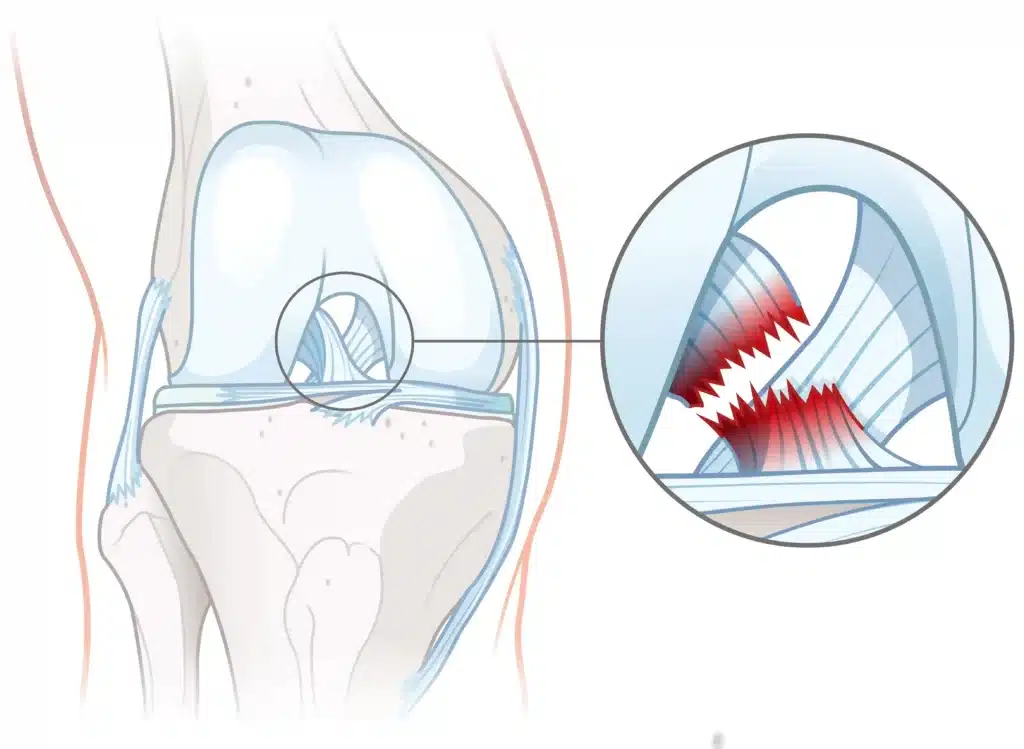
An anterior cruciate ligament (ACL) tear is one of the most significant injuries you can face as an athlete. It is particularly common in sports that involve rapid pivoting and direction changes, such as soccer and basketball.
If your surgeon recommends ACL reconstruction surgery, you’ll likely be discussing different graft options for reconstructing the ligament. What makes the quadriceps tendon graft increasingly popular among athletes, and could it be an option for you? Read on to find out.
What is a Quad Tendon Graft?
A quad tendon graft is a tissue graft taken from the quadriceps tendon, which connects the thigh muscles to the kneecap. During ACL reconstruction surgery, the graft is used to replace the torn ACL and restore stability to the knee.
Thigh Tendon for Reconstruction
The quadriceps tendon is located just above the kneecap, where it connects the quadriceps muscles at the front of the thigh to the patella. Because it’s a thick and durable tendon that helps transmit force through the knee, a portion of it can be obtained during graft harvesting for reconstruction.
Where It Sits in the Knee
Although the graft originates from the front of the thigh, it’s not left in its original position. During surgery, the harvested tendon is placed inside the knee joint and secured within tunnels created in the femur and tibia. Over time, the graft serves as the new ACL, helping to replicate the role of the injured ligament.
Why It Is Used in ACL Reconstruction
The quadriceps tendon provides sufficient tissue for reconstruction and can be prepared in different ways depending on the surgical approach. For this reason, it has become an established option alongside other commonly used grafts, such as hamstring and patellar tendon grafts.
Why Athletes Prefer Quad Tendon Grafts
If you participate in competitive sports, your expectations after ACL reconstruction surgery may differ from those of a recreationally active person. Beyond returning to daily activities, you may be thinking about performance, confidence, and whether you’ll be able to return to your previous level of competition.
Need for Strong Knee Stability
Sports such as soccer and basketball place significant demands on the knee. Movements like cutting, pivoting, accelerating, and landing from a jump require the knee to remain stable under high loads and rapid changes in direction.
The higher the demands of the sport, the more important it becomes to restore the knee’s ability to tolerate these movements safely.
Concern About Weakness After Surgery
Beyond recovering from the injury itself, you may be wondering how surgery could affect your performance. Common concerns include:
- Will I regain my strength and power?
- How long will it take to return to training and competition?
- What are the chances of returning to my pre-injury level of sport?
These are important considerations when discussing ACL reconstruction surgery and recovery, as both the surgical approach and recovery programme can influence your return-to-sport journey.
Previous Discomfort With Other Graft Types
You may also come across discussions about discomfort associated with different graft options. Depending on the graft used, some patients experience symptoms around the graft harvest site during recovery, which can influence day-to-day comfort and rehabilitation.
While ACL recovery is often focused on rebuilding strength and function, you may also want to consider your comfort when training, kneeling, or exercising.
Surgeon Recommendation Based on Activity Level
Although you may have preferences or questions about specific grafts, your surgeon’s final recommendation is usually based on several factors. These may include your age, anatomy, level of competition, previous injuries, and long-term sporting goals.
For some individuals, a quad tendon graft may be considered based on these factors. Ultimately, graft selection is individualised, with the aim of matching the reconstruction approach to your needs and intended level of activity.
How Quad Tendon Graft Compares to Other ACL Grafts
Several graft options are available for ACL reconstruction surgery, including quadriceps tendon, hamstring tendon, and patellar tendon grafts. Here’s how they compare:
Comparison Factor | Quad Tendon Graft | Other ACL Grafts |
Strength | Provides a substantial amount of tendon tissue and is commonly used for both primary and revision ACL reconstruction surgery. | Also well-established options with a long history of use in ACL reconstruction. |
Load Handling | The graft can be prepared in different configurations, depending on the surgical technique and patient requirements. | Load characteristics vary according to the graft source, preparation method, and individual patient factors. |
Donor-Site Discomfort | Some patients may experience discomfort around the front of the thigh following graft harvesting. | Symptoms may occur in different areas, such as the front of the knee or the hamstring region. |
Recovery Considerations | Rehabilitation focuses on restoring strength, mobility, and confidence in knee function. | Rehabilitation goals are generally similar, although specific exercises and recovery considerations may differ between graft types. |
A specialist assessment can help determine whether a quad tendon graft or another graft option may be suitable for your needs. Seek a second opinion and hear about ACL reconstruction options available at Alps Orthopaedic Centre.
When Athletes Can Return to Sports After ACL Reconstruction Surgery
Many athletes are able to return to training and competition following ACL reconstruction surgery. However, these decisions are typically based on functional recovery rather than a fixed timeline.
Before you’re cleared to return to your sport, your surgeon or physiotherapist will usually assess several factors.
Sport-Specific Training Milestones
Returning to sports is often a gradual process rather than a single event. Common rehabilitation milestones include:
- Return to straight-line running, which may occur around three to four months after surgery if strength, swelling, and movement quality are progressing appropriately.
- Progression to agility drills, jumping, landing, and controlled cutting movements as rehabilitation advances.
- Introduction of sport-specific change-of-direction drills, often around six to nine months after surgery for athletes in sports such as soccer or basketball. This is provided rehabilitation goals have been met and adequate knee control has been demonstrated.
- Successful performance of sport-specific movements without pain, instability, or significant asymmetry before consideration for unrestricted participation.
The exact progression will depend on the demands of the sport and the athlete’s individual recovery.
Strength and Stability Benchmarks
In addition to sport-specific skills, your surgeon may assess strength, balance, coordination, and movement quality. These assessments help determine whether your reconstructed knee can tolerate the physical demands of training and competition.
Functional testing may also be used to evaluate how the injured leg compares with the uninjured side. Meeting these benchmarks can provide useful information when assessing readiness for a safe return to sports.
Why Timing Varies Between Patients
Your ACL recovery timeline may not look the same as another athlete’s, even if you undergo the same procedure. Factors such as age, overall fitness, associated injuries, rehabilitation progress, and adherence to physiotherapy can all influence recovery.
Returning to your sport before adequate recovery may increase the risk of re-injury or persistent knee problems. If you resume high-demand activities before restoring sufficient strength, movement control, and confidence in the knee, additional stress may be placed on the reconstructed ligament.
Book an Assessment for ACL Reconstruction Surgery in Singapore
If you’ve torn your ACL and are considering reconstruction surgery, a specialist assessment can help determine the most appropriate treatment approach for your injury, activity level, and sporting goals.
At Alps Orthopaedic Centre, we assess the severity of your injury, discuss graft options, and guide you through the recovery and return-to-sport process.
Book a consultation with us today.
FAQs about Quad Tendon Grafts for ACL Reconstruction
Is it better than other ACL grafts?
No single ACL graft is considered universally better than the others. The most appropriate option depends on factors such as your anatomy, sporting demands, previous injuries, and recovery goals. A quad tendon graft is one of several established graft options used in ACL reconstruction, alongside hamstring and patellar tendon grafts.
How long does ACL recovery take?
ACL recovery varies from person to person. Factors such as the severity of the injury, associated knee damage, rehabilitation progress, and individual healing can all influence recovery timelines. Your surgeon and physiotherapist will monitor your progress and guide your return to activity.
When can athletes return to sports?
There is no single timeline that applies to every athlete. Return-to-sport decisions are typically based on factors such as strength, knee function, movement quality, and sport-specific readiness rather than time alone. Many athletes progress through a structured rehabilitation programme before returning to unrestricted participation.
Does ACL surgery fully restore stability?
ACL reconstruction surgery aims to restore knee stability and help you return to your desired level of activity. However, outcomes may vary between individuals, and successful recovery depends on factors such as muscle strength, movement control, and the presence of any associated injuries. Regular follow-up and adherence to your rehabilitation programme also play an important role in recovery.
