

TL;DR
- Cartilage injuries can cause pain, swelling, stiffness, or catching sensations. Leaving them untreated can worsen pain, limit movement, and make future treatment more complex.
- Treatment options range from non-surgical care to repair techniques like microfracture, cartilage cell implantation and osteochondral grafts, or for extensive damage, partial or total knee replacement.
- A knee specialist can help you choose the right approach to restore knee function, keep you moving, and protect your joint for the long term.
If you notice pain, swelling, or stiffness when moving your knee, it could be a sign of cartilage damage. Knee cartilage injuries are common, typically affecting athletes, active adults, and older individuals with wear-and-tear damage.
The encouraging news is that both cartilage repair and knee replacement can help restore your mobility and function. Find out how cartilage injuries are diagnosed, the treatment options in Singapore, and when it’s time to consult a specialist.
Signs and Symptoms of a Cartilage Injury
Cartilage injury doesn’t always cause obvious pain right away, but there are key signs to watch for. Common symptoms include:
- Knee pain that worsens with activity, especially twisting or squatting
- Swelling or stiffness, sometimes noticeable after exercise or at the end of the day
- Locking or catching of the knee during movement
- Reduced range of motion, making it harder to fully bend or straighten the knee
- Instability or giving way, particularly during sports or high-demand activities
Diagnosing A Cartilage Injury
Cartilage injuries can be tricky to spot, and symptoms don’t always appear immediately. Proper assessment is recommended to determine the extent of cartilage damage and the most suitable treatment approach.
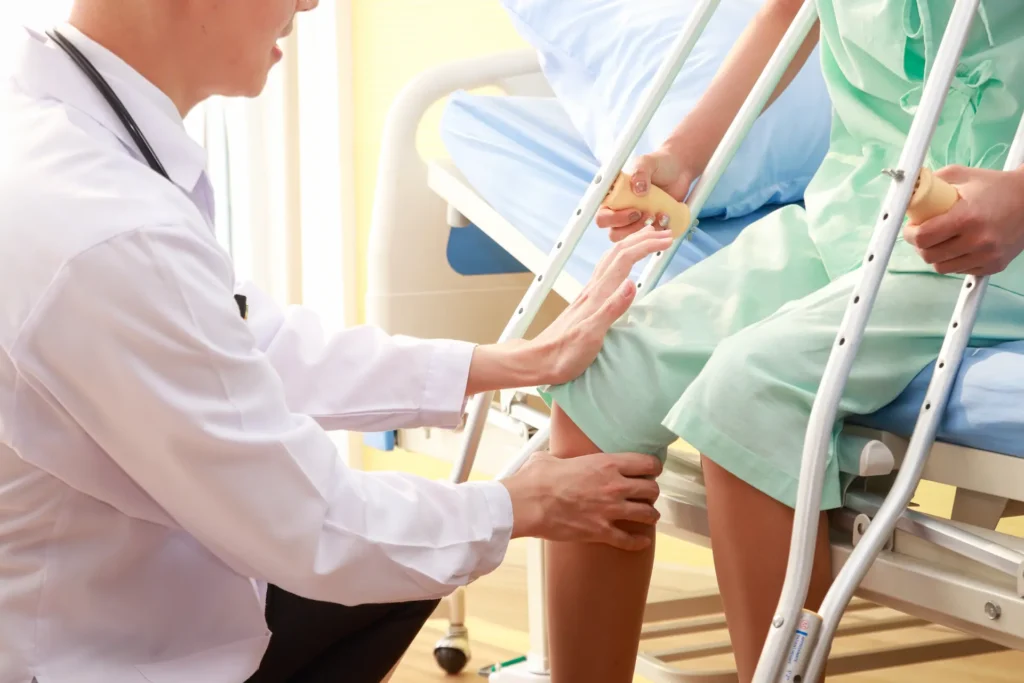
Medical History and Physical Examination
Your doctor will start by asking about your symptoms, the history of your injury, and your activity level. During a physical exam, they will check for, but not limited to:
- Pain location and severity
- Swelling or tenderness
- Range of motion limitations
- Knee stability and function during movement
This hands-on evaluation helps identify areas of concern and guides the next steps in diagnosis.
Imaging Tests
To pinpoint the size, depth, and exact location of cartilage damage, your doctor may also recommend imaging tests, such as:
- MRI (Magnetic Resonance Imaging): Provides a detailed look at soft tissues, revealing cartilage defects and any related ligament or meniscus injuries.
- Arthroscopy: A minimally invasive procedure using a small camera inserted into the knee, allowing direct inspection of the cartilage. In some cases, it can also be used to treat the damage during the same procedure.
When Is Cartilage Repair Possible?
Not all cartilage injuries can be repaired. Cartilage repair is typically considered when the defect is small to medium-sized, the surrounding cartilage is healthy, and the underlying bone is stable.
Those who are younger and more active often benefit most from repair, as it’s intended to restore the natural joint surface and maintain long-term knee function.
In contrast, large or degenerative injuries, and older patients with widespread osteoarthritis, may be better suited for knee replacement, which replaces the damaged joint surface entirely.
Types of Cartilage Repair Techniques
When cartilage injuries can’t be managed with non‑surgical care, there are several cartilage surgery options your specialist might consider. The choice depends on the extent of damage, where it’s located, and your activity goals.
Microfracture
This technique involves creating tiny holes in the bone beneath the damaged cartilage to allow blood and stem cells to enter the area and stimulate the formation of new cartilage‑like tissue. It’s usually done arthroscopically and tends to be suitable for smaller defects where the surrounding cartilage is still healthy.
Autologous Chondrocyte Implantation (ACI/MACI)
ACI (or its later form MACI) uses your own cartilage cells. The surgeon collects healthy cells from your knee, grows them in a lab, and then implants them back into the damaged area to promote regeneration. This technique is often chosen for larger focal defects, particularly in younger, active patients.
Osteochondral Autograft Transfer (OAT)
This method transfers healthy cartilage and the underlying bone from a less weight‑bearing part of your knee to the damaged area. By moving living tissue with its bone base intact, it helps restore joint surface integrity and is commonly used for medium‑sized defects.
Osteochondral Allograft Transplant
For larger defects or situations where there isn’t enough healthy tissue in your own knee to harvest, donor cartilage and bone can be used. This allograft approach replaces the damaged cartilage and bone together and can offer structural support for bigger lesions.
Cartilage Regeneration Techniques
Some arthroscopic methods harness your body’s own cells to repair small areas of cartilage damage without major alterations to surrounding tissues. These techniques are usually minimally invasive and suited to early or limited cartilage wear.
When a Knee Replacement Becomes the Better Option
Knee replacement may be considered when cartilage damage is extensive, your joint is worn, or repair techniques are unlikely to provide lasting relief.
Partial Knee Replacement (Unicompartmental Knee Arthroplasty)
If damage is confined to one area of your knee, a partial knee replacement may be suitable. In this approach, only the affected compartment is replaced, while healthy bone, cartilage, and ligaments are preserved. Recovery is generally faster, and the knee often feels more natural during walking and daily activities.
Total Knee Replacement
When most of your knee is affected, a total knee replacement can restore movement and reduce pain. At Alps Orthopaedic Centre, we use the Enhanced Recovery After Surgery (ERAS) approach, which supports early movement, minimised pain and follows a structured rehab plan.
Robot-Assisted Knee Replacement
In more complex cases, robotic knee replacement allows for more accurate alignment and implant positioning. This approach can improve long-term knee function and recovery.
Unsure which surgery is right for your cartilage injury? We can help you assess your options and recommend a plan that supports long-term function and activity. Contact us today.
Choosing Between Cartilage Repair vs Knee Replacement
Deciding between cartilage repair and knee replacement comes down to your age, activity level, how much damage there is, and what you want your knee to do in the long term.
Repair allows you to keep your natural joint and works well for younger, active patients who want to stay active. On the other hand, knee replacement can be a safer, more predictable option when damage is extensive or the joint is worn.
If you’re unsure whether cartilage repair or knee replacement is right for you, speak to a specialist, who will guide you through the pros and cons of each approach, helping you choose the treatment that fits your lifestyle and health needs.
Consult A Cartilage Specialist For A Second Opinion
At Alps Orthopaedic Centre, we prioritise minimally invasive techniques whenever possible and focus on restoring your knee’s strength, stability, and range of motion. We also take the time to understand your lifestyle, activity goals, and long-term expectations to ensure your knee can support the movements you want to return to.
For more on cartilage injury treatment, schedule an appointment with a cartilage specialist today.
